Thursday, January 26, 2012
Khaleequr Rahman: Dig Vijaya Singh ji justifies 9% reservation to Mi...
Khaleequr Rahman: Dig Vijaya Singh ji justifies 9% reservation to Mi...: Dig Vijaya Singh ji Senior Congress leader and General Secretary Incharge of UP Shri Digvijay Singh ji on Saturday accused the BJP of polar...


Dig Vijaya Singh ji justifies 9% reservation to Minorities
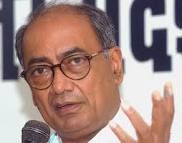
Dig Vijaya Singh ji
Senior Congress leader and General Secretary Incharge of UP Shri Digvijay Singh ji on Saturday accused the BJP of polarising elections in UP and said its decision to field Uma Bharti shows its "total bankruptcy" of leaders in the state.
Popularly and affectionately known as Diggy Raja says that "I must say, that in all this one thing that comes out clearly is that there is a total bankruptcy of leaders in BJP's UP unit. That is why they had to import a leader from Madhya Pradesh.....But we don't take her seriously," The Congress leader charged the BJP with deliberately polarising the elections in UP as it has no issues. Shri Dig Vijaya Singh said he "does not mind" Gujarat Chief Minister Narendra Modi campaigning in UP.
On the reservation issue, Diggy Raja, who is in the thick of the Congress election campaign in Uttar Pradesh, insisted that the 4.5 per cent quota within OBC quota was not religion-based reservation but merely a sub-categorisation" to ensure that backward sections within the minorities got their due.
"The 4.5 per cent reservation is a sub-categorisation within OBC quota so that backwards among the minorities are 'ensured' that they get their fair share. It is not based on religion. As it is, the backwards among the minorities are getting reservation within the OBC quota. The 4.5 per cent quota has been given to ensure that these backward minorities get their due share," he said.
When asked what was the need for a separate quota within quota if backwards among minorities were already benefitting from OBC reservations, he claimed that though the backward castes among minorities have been included within the 27 per cent for OBCs, they have not been the real beneficiaries and this 4.5 per cent quota would help them.
Shri Dig Vijaya Singh denied that this decision and its timing were aimed at winning Muslim votes. However, he agreed that since the percentage of OBCs in other minority communities- Christians, Parsis and Sikhs, among others- was small, the biggest beneficiaries would be Muslims. "The Sikhs have an OBC population but their number is minimal," he said.
The former Madhya Pradesh Chief Minister also justified Law Minister Salman Kurshid's promise of 9 per cent reservation to minorities in place of the 4.5 per cent. "The 4.5 per cent quota within quota is for backwards among minorities across the country. Muslims constitute 13 per cent of the country's population. Mr.Salman Kurshid was talking about minorities in Uttar Pradesh where Muslims are 18 per cent," Diggy Raja said. The centre has given Rs 7,000 crore package to weavers. "The package is for all weavers whether in the handloom or power loom sector," he said. Around 95 per cent of the weavers in UP belong to the Muslim community.
Wednesday, January 25, 2012
Dig Vijaya Singh saheb clears the doubts about the Minority Institutions inclusion in RTE

Shri Dig Vijaya Singh ji
The statesman and the leader the world respects and the Congress General Secretary Shri Digvijaya Singh ji on Monday sought to dispel apprehension of members of the All India Muslim Personal Law Board on issues related to inclusion of Madarsaas under the Right To Education, saying minority institutions would be kept out of RTE purview.
"The government has in principle agreed to keep minority institutions out of the purview of RTE while discussions were on regarding other issue related to the Direct Taxes Code Bill though no decision has been taken," Diggy Raja told reporters in Lucknow.
He cleared the doubts raised by some members of the AIMPLB.
"Congress is ready for a dialogue if the issue is connected with the religious belief or concerned with the place of religious importance," he said referring to the Waqf Property Bill.
The Congress leader incharge of UP affairs lashed out at the BJP over its agitation against what they termed reservation on religious grounds saying that the sub-quota of 4.5 per cent within the OBC quota was not new but part of the Mandal Commission recommendation which is already in force.
"When the UPA government found that only around one per cent Muslims got its benefit in the past 22 years, it decided on a sub-quota to do away with this injustice," Raja Saheb said, adding that the same had also been promised in the election manifesto of 2009.
Alleging that the only intention of the BJP was to create communal frenzy, Diggy Raja there was no confusion in the minds of the people that the politics of the saffron party starts and ends on communal agenda.
On BJP president Nitin Gadkari terming firebrand leader Uma Bharti as a capable leader, Diggy Raja said he had "full sympathy" with state leaders like Rajnath Singh, Kalraj Mishra, Vinay Katiyar and Surya Pratap Shahi who have given their lives in strengthening the party in UP.
"Now, Gadkari has told them that you all are useless and Uma, who had used derogatory language against Advani, broke the party and lost her deposit in election from Tikamgarh, is capable," Dig Vijaya Singh ji said.
Referring to Gadkari projecting Gujarat Chief Minister Narendra Modi as the prime ministerial candidate, he said that Advani should be worried about it.
Earlier, several Muslim religious leaders, including AIMPLB member Syed Athar Ali extended support to the Congress in the coming elections.
Khaleequr Rahman: Dig Vijaya Singh saheb clears the doubts about the...
Khaleequr Rahman: Dig Vijaya Singh saheb clears the doubts about the...: Shri Dig Vijaya Singh ji The statesman and the leader the world respects and the Congress General Secretary Shri Digvijaya Singh ji on Mon...
Thursday, January 19, 2012
Khaleequr Rahman: ASER Centre releases Annual Status of Education Re...
Khaleequr Rahman: ASER Centre releases Annual Status of Education Re...: The Press Release of ASER: The Annual Status of Education Report, ASER 2011 was released in New Delhi by the Honourable Minister of Human...
ASER Centre releases Annual Status of Education Report (ASER) 2011

The Press Release of ASER:
The Annual Status of Education Report, ASER 2011 was released in New Delhi by the Honourable
Minister of Human Resource Development, Shri Kapil Sibal. This was followed by a panel discussion chaired by Minister of State for Human Resource Development, Dr D Purandeswari.
Completing its 7th year, ASER is the largest annual survey of children in rural India. Facilitated by
Pratham, ASER is undertaken by local organizations and concerned citizens. ASER 2011 reached 558
districts, 16,017 villages, 327,372 households and 633,465 children.
Every year, ASER finds out whether children in rural India go to school, whether they can read simple
text and whether they can do basic arithmetic. Eighteen months after the Right to Education Act came
into effect, ASER 2011 also included a visit to more than 14,000 government schools to assess progress
towards compliance with those norms and standards specified in the Right to Education Act that are
easy to measure.
Very high enrollment figures for rural India
96.7% of all 6-14 year olds in rural India are enrolled in school. This number has held steady
since 2010.
States that had a high proportion (over 10%) of 11-14 year old girls out of school in 2006 have
made significant progress. For example Bihar out of school numbers have dropped from 17.6%
in 2006 to 4.3% in 2011. Rajasthan shows a decline from 18.9% in 2006 to 8.9% in 2011. Uttar
Pradesh has shown the least progress with 11.1% 2006 and 9.7% in 2011.
Substantial numbers of five year old children are enrolled in school. The All India figure stands at
57.8% for 2011. This proportion varies across states, ranging from 87.1% in Nagaland to 18.8%
in Karnataka.
Recommendations: India has made impressive progress in enrollment. Now is the time to turn from
inputs and access and focus on the challenge of how to improve quality.

Private school enrollment is rising in most states
Nationally, private school enrollment has risen year after year for the 6-14 age group,
increasing from 18.7% in 2006 to 25.6% in 2011. These increases are visible in all states except
Bihar.
In states like Uttarakhand, Rajasthan, Uttar Pradesh, Maharashtra, Andhra Pradesh, Kerala,
Manipur and Meghalaya there has been an increase of over 10 percentage points in private
school enrollment in the last five years.
According to ASER 2011 data, between 30 to 50% of children in rural areas of Haryana, Uttar
Pradesh, Nagaland, Meghalaya, Punjab, Jammu & Kashmir, Rajasthan, Uttarakhand,
Maharashtra and Andhra Pradesh are enrolled in private schools.
Conclusion: Increasingly, parents are choosing to send children to private schools. There is a possible
conflict between parental choice and RTE norms. How can this conflict be resolved?
Basic reading levels showing decline in many states
Nationally, reading levels are estimated to have declined in many states across North India. The
All India figure for the proportion of children in Std V able to read a Std 2 level text has dropped
from 53.7% in 2010 to 48.2% in 2011. Such declines are not visible in the southern states.
In a few states there is good news. In Gujarat, Punjab and Tamil Nadu the numbers for 2011 are
better than for 2010. Several states in the north-eastern region of India also show positive
change. Karnataka and Andhra Pradesh numbers remain unchanged from last year.
Recommendations: Reading is a key fundamental requirement for accessing and acquiring knowledge.
It is essential for progress in school and in everyday life. Reading instruction has to be an important
part of the early years/grades in school. Along with reading skills we need to build and strengthen
children's ability to understand, communicate, express themselves and think critically.
The unsatisfactory levels of basic reading ability suggested by ASER and other studies including PISA,
point to an urgent need to focus on basic learning outcomes. Each state should define realistic,
measureable outcomes in reading and understanding that can be understood by teachers and parents.
RTE states that children's progress has to be communicated to parents. We need to start doing that.
Textbook content needs to be reviewed. Are textbooks too difficult for young children? Is the pace of
the textbook moving too quickly? Are we equipping teachers adequately for teaching reading?
Arithmetic levels also show a decline across most states
Basic arithmetic levels estimated in ASER 2011 show a decline. For example, nationally, the
proportion of Std III children able to solve a 2 digit subtraction problem with borrowing has
dropped from 36.3% in 2010 to 29.9% in 2011. Among Std V children, the ability to do similar
subtraction problems has dropped from 70.9% in 2010 to 61.0% in 2011.
This decline is visible in almost every state; only Andhra Pradesh, Karnataka and Tamil Nadu
show improvements from 2010 to 2011. Several states in the north-eastern region of India also
show positive change. There is no change in arithmetic levels in Gujarat.
Recommendations: 2012 is the year of mathematics. We need to build broad consensus across states
on the achievement of basic math literacy. Here too, measureable and realistic learning goals need to
be agreed upon. These need to be communicated widely and the government must report on progress
towards these goals. Basics of number knowledge and operations as well as the ability to critically
think and solve problems need to be built in the early grades.
The data on reading and arithmetic point to the fact that most children are two to three years behind
where they are expected to be. Large scale corrective action to build these basic skills is urgently
needed. As we move into the 12th Plan period and into a new year for the SSA annual work planning
cycle, learning outcomes must move to centre stage.

RTE refers to a "completion" certificate after 8 years of schooling. At the completion of Std VIII, a
nontextbook dependent basic skills testing certification process can be instituted. Anyone completing
eight years of schooling should be eligible to take the certification process. Children can appear as
many times as they want. This may help in creating a national standard.
Main findings from school visits:
Children’s attendance has declined
At the All India level, children's attendance shows a decline from 73.4% in 2007 to 70.9% in 2011
in rural primary schools.
In some states, children's attendance shows a sharp decline over time: for example in primary
schools of Bihar, average attendance of children was 59.0% in 2007 and 50.0% in 2011. In
Madhya Pradesh this figure has fallen from 67.0% in 2007 to 54.5% in 2011 and in Uttar Pradesh
from 64.4% (2007) to 57.3% (2011).
Recommendations: It is well known that attendance in school is an essential precondition for good
educational outcomes. It is time that attendance, instead of enrollment, is used as the measure of who
is in school.
More than half of all Std 2 and Std 4 classes are sit together with another class
During the school visit, ASER focuses on Std 2 and Std 4 and observes whether children in these
classes are sitting together with children from other classes.
Nationally, for rural government primary schools, data suggests that over half of all classes
visited are multigrade. For example, all India Std 2 was sitting with one or more other classes in
58.3% of Std 2 classes in primary schools were sitting with another class. This figure is 53% for
Std 4.
Recommendations: There are real challenges in Indian classrooms. These include diverse age groups,
wide variations in ability and multiple classes sitting together. Teachers need to be equipped in a
practical way to be able to teach effectively under these circumstances. RTE provides new
opportunities for teacher training. These realities need to be taken into account when we prepare and
support teachers.
Schools get their grants, but not on time
Between FY 2008-9 and FY 2010-11 the flow of SSA grants to schools improved significantly. However,
this improvement occurred largely between FY 2008-9 and 2009-10. In fact a marginal decrease in the
proportion of schools receiving grants is observed between FY 2009-10 and 2010-11. The data suggest
that schools tend to get their grants during the second half of the fiscal year.
Main findings: Tracking RTE Indicators
Not much change in compliance on Pupil-teacher ratio and Classroom-teacher ratio
At the All India level, there has been a marginal improvement in the proportion of schools
complying with RTE norms on pupil-teacher ratio, from 38.9% in 2010 to 40.7% in 2011. In 2011,
Kerala stands out with 94.1% of schools in compliance, and in Jammu & Kashmir, Nagaland and
Manipur, more than 80% schools are in compliance with these norms.
At the All India level, there has been a marginal decline in the proportion of schools with at least
one classroom per teacher, from 76.2% in 2010 to 74.3% in 2011. In Mizoram, 94.8% of schools
comply with the teacher-classroom norms and in Punjab, Uttarakhand, Rajasthan, Uttar
Pradesh, Gujarat and Maharashtra more than 80% of schools are in compliance.
No major changes in buildings, playgrounds, boundary walls or drinking water
All India figures for 2011 show no significant improvement in the proportion of schools with an
office cum store. This figure remains at 74%. Similarly, for the country has a whole, about 62%
of visited schools had a playground, both in 2010 and in 2011. However, there has been an
increase in the proportion of all schools that have a boundary wall, from 50.9% in 2010 to 54.1%
in 2011.
Nationally, the proportion of schools with no provision for drinking water remained almost the
same – 17.0% in 2010 and 16.6% in 2011. The proportion of schools with a useable drinking
water facility has remained steady at about 73%. Kerala has the best record with 93.8% schools
that have a useable drinking water facility.
Better provision of girls’ toilets
The proportion of schools where there was no separate girls' toilet has declined from 31.2% in
2010 to 22.6% in 2011. Also, there has been a substantial improvement in the proportion of
schools that have separate girls' toilets that are useable. This figure has risen nationally from
32.9% in 2010 to 43.8% in 2011.
More libraries in schools, and more children using them
The proportion of schools without libraries has declined from 37.5% in 2010 to 28.6% in
2011. Children were seen using the library in more schools as well – up from 37.9% in 2010 to
42.3% in 2011
Saturday, January 14, 2012
Khaleequr Rahman: Partnership Summit 2012 - A great success
Khaleequr Rahman: Partnership Summit 2012 - A great success: The Partnership Summit 2012 The Partnership Summit 2012 , an international business event organised by the Confederation of Indian Industry...
Subscribe to:
Posts (Atom)